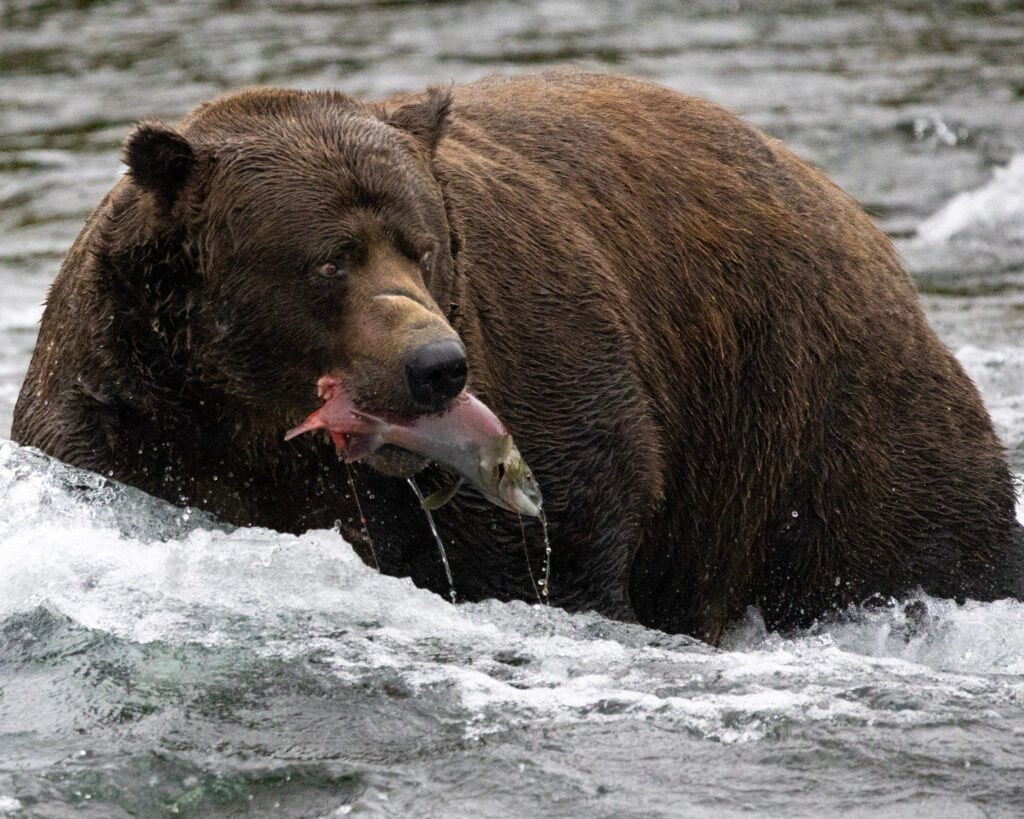
Fat Bear Week is an annual, tournament-style online competition where the public votes for the fattest and most successful brown bears in Alaska’s Katmai National Park and Preserve. Since 2014, Fat Bear Week has generates an enormous amount of attention. Tier 1 media publications write about it. Nearly 2 million people voted last year. Those are great marketing campaign numbers! And yet, nothing about this annual event feels like a marketing campaign. I don’t feel like I’m being “sold” anything. It’s just fun, highly visual, participatory, easy to understand, and emotional. Meanwhile, the National Park Service is exposing us to fantastic wildlife content, helping us appreciate and feel more empathetic to the land and animals we’re getting a window into. Here are a few reasons why it works. Let’s start with the KISS (keep it simple, stupid) concept. That’s our first takeaway.
Lesson #1: Create a simple narrative.
The concept’s easy: Bears eat. Bears get big. People vote. One bear wins. It’s simple. It’s like March Madness for wildlife. And who doesn’t like a contest! Use a model people know and make it easy. If your audience doesn’t understand your marketing campaign instantly, they probably won’t participate.
Lesson #2: Involve audience participation.
Anyone and everyone can vote. Suddenly you’ve turned passive viewers into active participants. One click and they have skin in the game. They’ll come back to see how their pick or picks fared, and many will linger, engaging with content and comments. The marketing campaign takeaway here is to provide your audience with something to do. Instead of just sharing or giving content, find ways for your audience to vote, rank, predict, share, or debate something. People have opinions. Let them express them!
Lesson #3: Give people something to cheer for.
Fat Bear Week is a competition. There are brackets, match-ups, winners, and losers. People put skin in the game and choose sides. They’re aligning with other participants, advocating, and providing you with their opinions and preferences. You can do this in your marketing campaigns, too! Bookstores do this when they feature employee recommendations. Coffee baristas may profile their favorite drink. We’ve even seen wedding dress shops profile the latest styles in “sweet 16” fashion (puns intended). Give your audience a reason to have and express their opinion. And then talk about it!
Lesson #4: Bring personality to the subjects.
You’re not voting for “Bear 747.” You’re rooting for 747, aka “Bear Force One”. The bear has a history, personality, and defining characteristics. The bear has a story, and now he or she is the hero in yours. When your marketing campaign subject or product has a story, people remember. So, provide facts, anecdotes, and even whimsy because people act based on both the head and heart.
Lesson #5. Education and entertainment can coexist.
Fat Bear Week has a larger purpose: educating people about brown bears, their ecosystem, and the importance of salmon and healthy habitats. But that objective alone isn’t necessarily what garners people’s attention or engagement. Fat Bear Week elegantly educates along the way. You see images and videos of bears doing their thing in their ecosystem. Beyond marveling at the bears, salmon, or the landscape, it’s a perfect time for the host to give context to what people are seeing. As marketers, you don’t always have to lead with the lesson or objective. Step one is pulling people in. Then, you find ways to introduce your message and share information. Advocacy is built over time through story and experience. Speaking of advocacy…
Lesson #6: Connect fun to a bigger purpose.
There’s a genuine conservation story underneath the fun. Fat Bear Week helps people connect emotionally with Katmai National Park and the bears that live there. Think about that. In 2025, roughly 1.7 million people voted during Fat Bear Week. That’s a tremendous audience to re-market to after the salmon run is over. What if “Bear Force One”, “Chunk”, “Grazer”, or “Holly” had an update in the “off season”? How many of those 1.7 million voters might be inclined to donate or sign a petition for their protection? In the same way, your marketing campaign can entertain and reinforce a larger brand purpose. A rich experience has a halo effect. This brings us to the next point.
Lesson #7: Create anticipation around an annual event.
Fat Bear Week is 12 years old. It’s not just a social post. People know it’s coming, talk about it, and follow along and return year after year. You start to remember the “characters,” look forward to seeing how they’ve changed and meeting new entrants. In the same way, recurring content franchises can become much more powerful than one-off campaigns. Create something your audience expects and looks forward to. Sponsor a report. Send out a year-end review. Have an annual partner conference (mixing entertainment and fun). The options are endless. But find something that resonates with your brand and own it. Stick to it!
Lesson #8: Make participation part of the story.
Each year there are new bears, new match-ups, new surprises, and a new champion. The audience gets to participate in the unfolding story. Each bear’s story gets richer, and there’s always a rookie to learn about. The stories are built year-over-year. And history and longevity add to the stickiness of the experience. In the same way, think of your marketing campaign as something that unfolds over time. It’s not a piece of content or disconnected information. It’s connected and gives people a reason to follow you and see what happens next.
Lesson #8: Make the content shareable.
Big brown bears are visually irresistible. Add funny names (like the aforementioned “Bear Force One”), compelling before-and-after photos, personality profiles like they’re on a dating app, and throw in a competition… and you’ve got content people naturally want to share. Similarly, when you’re creating a campaign, don’t settle for content that’s on-brand and looks good. Ask yourself, “would I want to re-share this?” and make sure your content has that appeal. And you know what helps? A great sense of humor. That’s #9.
Lesson #9: Have a sense of humor!
“Fat Bear Week” is funny. The name alone makes people smile. And the bears have personalities, nicknames, histories, and recognizable traits. It’s not trying too hard. (We’ve all seen those ads. Gross.) The National Park Service doesn’t try to make wildlife conservation sound overly formal or academic. It makes people care by making them smile first. How simple is that?! Marketing for a serious subject doesn’t mean your marketing campaign has to be serious all the time. Just be mindful of where and when to play!
What’s your “Fat Bear Week” marketing campaign?
Tip of the cap to the rangers and marketers at the NPS. They’ve given us several great lessons for brands. You don’t always need a bigger budget to create a bigger response. Sometimes you need a better idea. So, our question to you is, what could you turn into an event that people want to come back to year after year?